
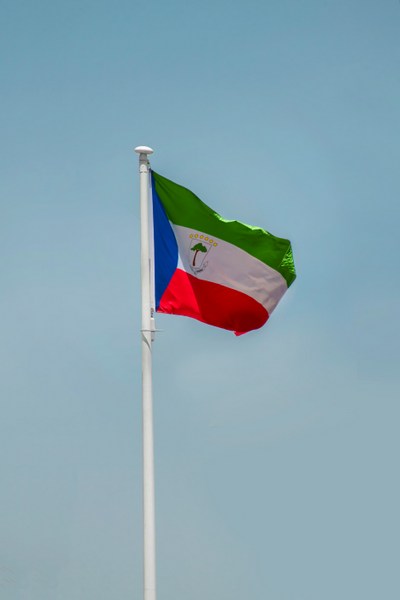
Tourists love taking photographs when traveling because capturing moments through the lens allows them to preserve and relive their experiences long after the trip has ended. Photographs serve as tangible memories that document their adventures, enabling them to share their stories with friends and family. Additionally, in today’s digital age, social media platforms provide an avenue for tourists to showcase their travels, garnering admiration and engagement from a global audience. Beyond personal satisfaction, photography encourages a deeper appreciation of new cultures, landscapes, and landmarks, enhancing the overall travel experience by prompting tourists to observe and engage more attentively with their surroundings.
In this digital era, taking pictures is the essence of traveling. However, in Equatorial Guinea, a seemingly innocent act of capturing memories can land you in trouble.
“You can’t take more pictures in Equatorial Guinea,” says Alexandra Bowman, a travel consultant from Truely eSIM. A statement patted with disbelief, yet a fact increasingly intertwined with travel plans to this West African nation.
So, why adopt such an unusual rule in an age where travel and exploration are memorialized through the lens? Know the reasons below!
Probing the Prohibition
Equatorial Guinea, located on the west coast of Central Africa, is known for its rich biodiversity and vibrant cultures. However, discerning travelers will quickly become aware of some stringent regulations — chief among them a restriction on photography.
This rule doesn’t originate from a disdain for technology or nostalgic reasoning. Rather, it’s tied to the country’s concerns for security and privacy, including a certain degree of sensitivity towards the nation’s public image. The government of Equatorial Guinea exercises strong control over the country’s image, wary of depictions that may potentially vilify or provide an unfavorable portrayal of the country.
National Security
Why might a country discourage photography, especially when it boasts many aesthetic marvels worthy of capture? There are two main reasons: security concerns and respect for cultural norms.
Alexandra Bowman explains, “This rule isn’t a blanket ban. Rather, it’s a measure to prevent the risk of espionage and maintain the security of the nation, where photography can be a tool for potential harm.” This reason primarily involves strategic, military, and similarly sensitive locations.
A Shield for Sovereignty
Equatorial Guinea’s stance on photography is deeply rooted in protecting sovereignty and national security. Like many countries with tumultuous histories of colonization and political instability, Equatorial Guinea is cautious about the portrayal of its national image.
According to UNESCO, the country has a diverse cultural heritage resulting from complex historical conjugations, including colonialism and its lasting impacts. The government’s concern is that unrestricted photography might misrepresent or over-simplify this heritage, potentially compromising their sovereignty.
Privacy and Respect
For the local population, the rule is a guardian of privacy and respect for customs and traditions that often find themselves misunderstood or misinterpreted when observed from the outside. The United Nations reports that the right to privacy is of universal importance. In Equatorial Guinea, a nation with deep cultural roots, this extends to the concern of being culturally misrepresented or commodified through images shared worldwide.
Economic and Political Context
It’s essential to consider Equatorial Guinea’s unique economic and political context. The country is Africa’s only Spanish-speaking nation and one of the continent’s largest oil producers. Yet, it deals with stark income inequality and limited media freedom.
Civicus.org reports the government tightly controls the media in this country. Therefore, the restriction on photography can also be seen as an extension of the state’s efforts to control the narrative within and beyond its borders.
Safeguarding Natural and Historical Riches
Equatorial Guinea is home to UNESCO World Heritage Sites, including the Island of Bioko and the Monte Alen National Park. The photography prohibition is also in place to protect these sensitive ecologies and historical sites.
There’s a global increase in the acknowledgment of over-tourism and its negative effect on the environment, cultural landmarks, and local communities, highlighted by reports from the World Tourism Organization.
A Traveler’s Guide to Legal Lensmanship
So, how does this photography ban impact the average tourist planning a trip to Equatorial Guinea? Here’s the deal:
- Travelers cannot indiscriminately photograph public places or landmarks. In some ways, photography is allowed, but with strict restrictions.
- To capture buildings, landmarks, or scenes, express permission must be obtained from local authorities. This isn’t always a quick and simple process.
- Covert or unauthorized photography can lead to legal trouble, including heavy fines and possible confiscation of photographic equipment.
- Individuals and private property should never be photographed without express consent. This goes for most countries, but it’s worth extra emphasis when visiting Equatorial Guinea.
A Picture-Perfect Endnote
Many might see this rule as a damper on the travel experience, particularly photo enthusiasts who love capturing priceless moments and sights. But Alexandra Bowman, a travel consultant at Truely eSIM, offers a different perspective:
“Embracing a country’s culture and norms is a key part of the travel experience. This can be treated as an opportunity to learn, adapt, and engage in meaningful conversations with locals, rather than viewing it as a limit on your wanderlust.“

Leave a Reply